

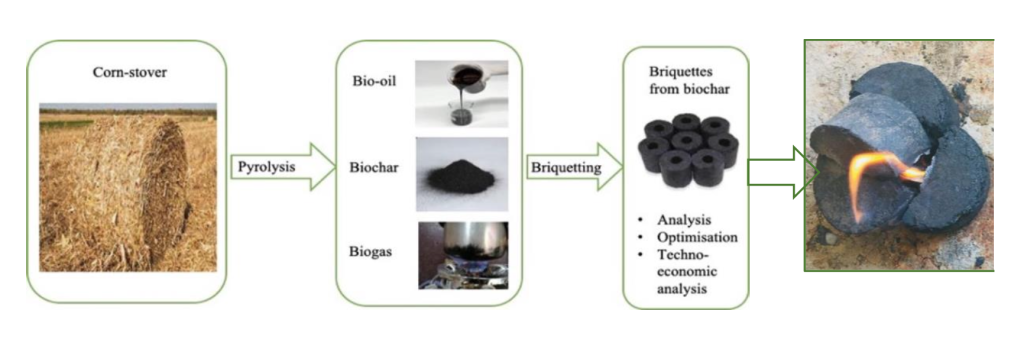
Figure: Beneficiation of maize harvest waste (Ngubane and Oyekola, 2023).
The project explored the slow pyrolysis and densification techniques used to transform waste maize stover (WMS) into eco-friendly solid fuel (briquettes) with high carbon content and high calorific value (HHV) to fulfil the rising energy demand in South Africa. The respective generated models estimate that the HHV, compressive strength, density, and durability are, respectively, 27.32 MJ/kg, 5.48 N/mm2, 770.40 m3/kg, and 98.87% under the optimal conditions (40 MPa, 8.74%, and 21.6 °C). The WMS briquetting plant’s technological and economic studies revealed that it could produce 300 kg/h of dry briquettes. The facility was determined to be economically feasible by this study’s economic evaluation with a $518,791 total capital investment (TCI), a discounted payback period (DPBP) of under four years, and a discounted cash flow rate of less than 30%. The briquettes produced are comparable to South African Bituminous A-grade coal (Figure 12) (Ngubane, N.F. and Oyekola, O.O., 2023).
Figure: Beneficiation of maize harvest waste (Ngubane and Oyekola, 2023).