

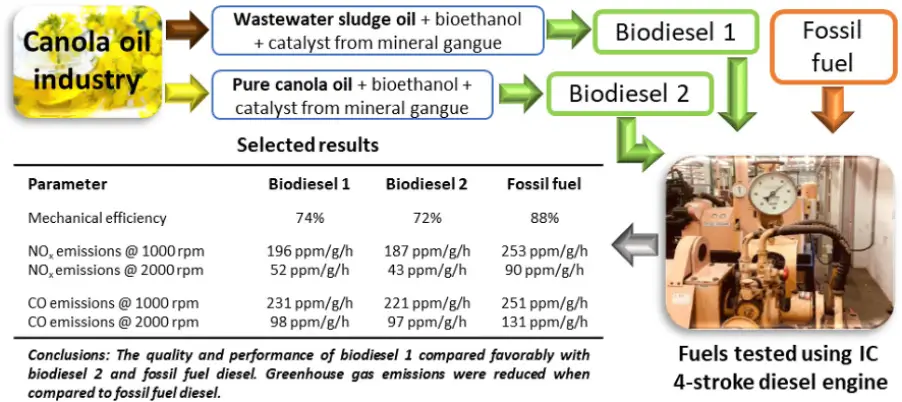
Figure: Beneficiation of wastewater sludge oil and mineral processing waste (Ngoie et al., 2020).
In this study, primary wastewater sludge from the edible oil sector was employed as a novel feedstock for bioethanol synthesis for the production of biodiesel and monounsaturated fats. Utilised was a novel nano-magnetic catalyst created from cupriferous mineral processing waste. An oil-to-ethanol ratio of 1:9, a catalyst loading of 5 weight percent, and a reaction period of 180 minutes at 75 °C were used to get the highest biodiesel yield of 94%. The strategy used in this study can potentially lower the expenses for materials, energy use, and water use related to traditional biodiesel production processes. Additionally, while simultaneously reducing waste, it might lessen the adverse effects of conventional biodiesel manufacturing on the security of food and land. The biodiesel produced was successfully tested using a single-cylinder four-stroke diesel engine (Figure 13) (Ngoie, W.I, Welz, P.J, Oyekola O.O and Ikhu-Omoregbe, D, 2020).
Figure: Beneficiation of wastewater sludge oil and mineral processing waste (Ngoie et al., 2020).